Origin advantage
Why source banana fiber & pineapple fiber from Bangladesh?
Buyers comparing natural fiber exporters usually shortlist the Philippines and India. Bangladesh belongs on that list — and for most specifications, at the top of it. Here is the complete case, with the numbers behind it.
Raw material
The waste is already there — by the thousand tonnes
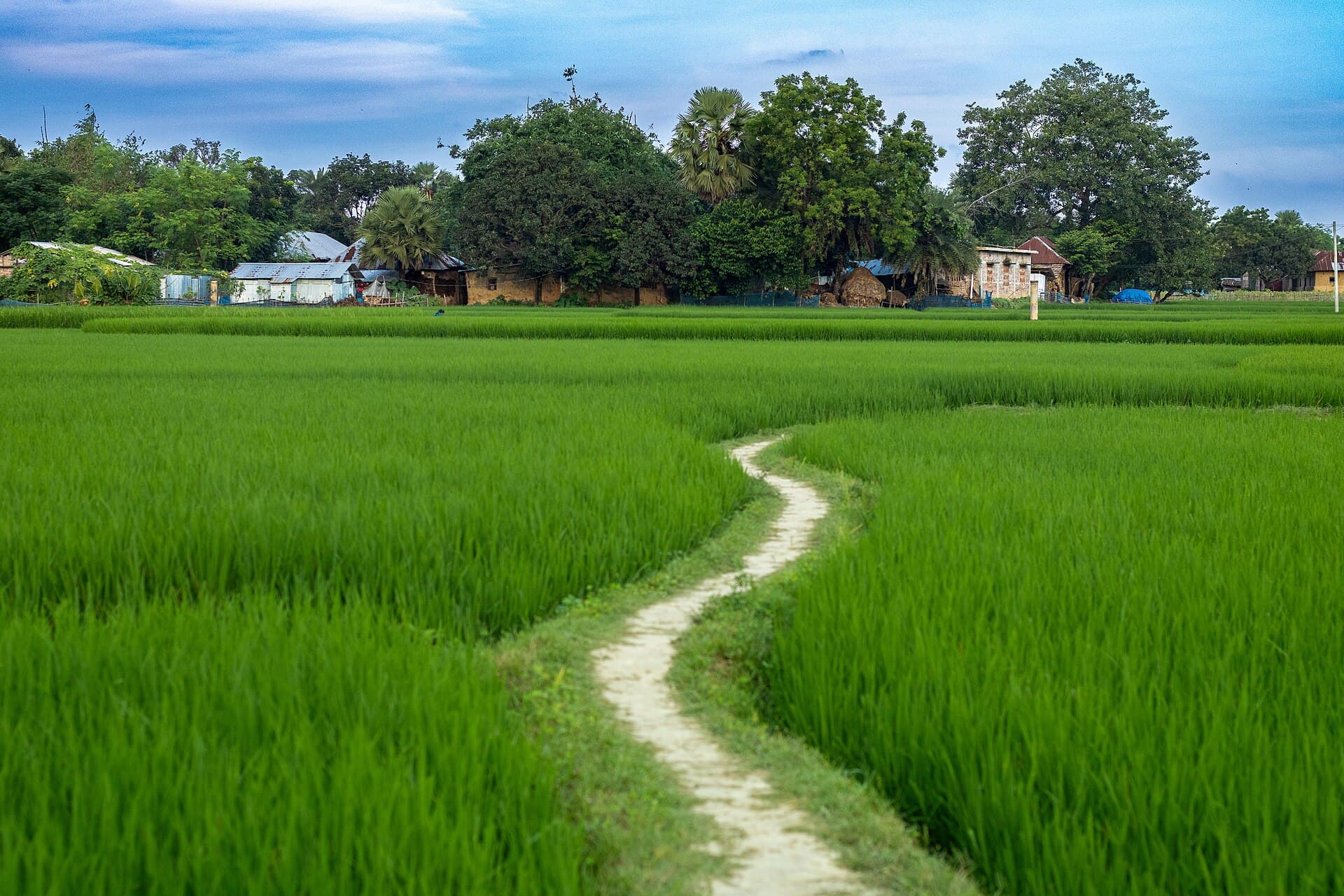
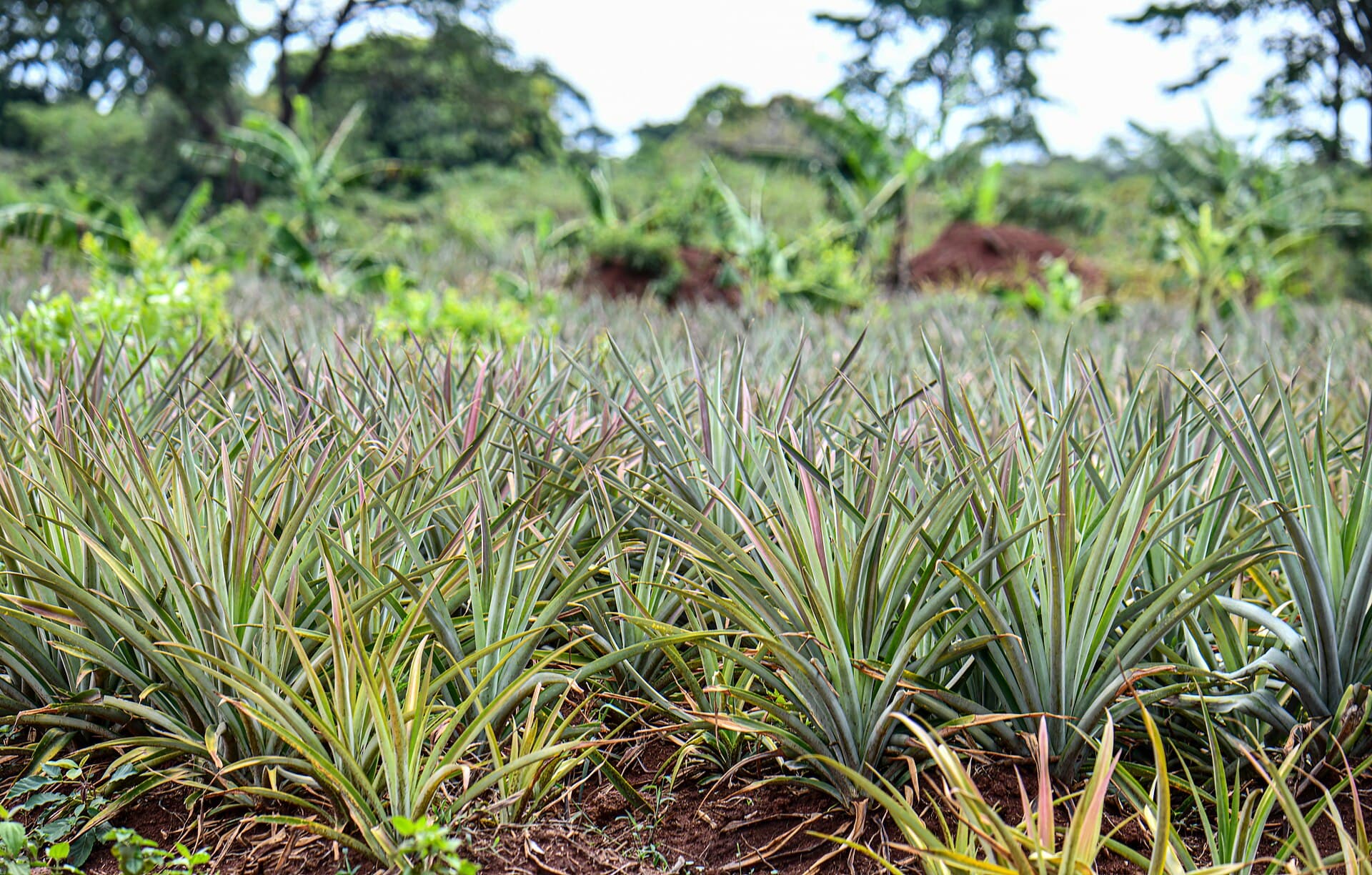
The Modhupur and Tangail districts form one of Bangladesh's largest pineapple belts, ringed by smallholder banana plots. The feedstock costs nothing to grow because it is a by-product of food crops.
- Pineapple belt
- ≈6,880 hectares under cultivation; every tonne of fruit leaves ~3 tonnes of long fiber-rich leaves behind.
- Banana acreage
- Smallholder plots in the same districts, each cutting down pseudostems after fruiting — 30–40 kg of water-rich trunk per plant.
- Yields
- 5–8% fiber from fresh pseudostem weight, 1.5–2.5% from pineapple leaves — low percentages, but the feedstock is measured in tens of thousands of tonnes.
- No arable land
- None of this requires dedicated farmland — the strongest possible foundation for a circular fiber claim.
Market access
EU duty advantage under GSP
A direct landed-cost advantage for EU buyers of vegetable textile fibers — plus the trade infrastructure built by the garment industry.
EU duty advantage at a glance
- Scheme
- EU Generalized Scheme of Preferences (GSP)
- Applies to
- Vegetable textile fibers under HS 5305 from Bangladesh
- Effect
- Reduced or zero import duty on many textile lines vs. full MFN rates
- Extra synergy
- Brands already manufacturing garments in Bangladesh can consolidate fiber + garments from one origin
- Beyond duty
- Banks fluent in L/Cs, forwarders who know textile cargo, customs brokers processing HS 5305 weekly
Logistics
Chattogram moves your fiber on schedule
Around 90% of Bangladesh's seaborne trade passes through Chattogram — a port that runs on garment-industry rhythm, with dense sailings to Europe, the Mediterranean, and North America.
Shipping from Bangladesh
- Sea — Europe
- ≈24–35 days from Chattogram
- Sea — United States
- ≈28–40 days from Chattogram
- Air — worldwide
- ≈5–10 days via Dhaka (Hazrat Shahjalal Intl.)
- Main seaport
- Chattogram — handles ~90% of Bangladesh's seaborne trade
- Container capacity
- ≈18–20 t of compressed fiber per 40' HC
- Export documents
- HS 5305, phytosanitary certificate, Certificate of Origin, per-lot TDS
People
A fiber workforce the garment boom trained
- Bangladesh is the world's second-largest garment exporter — four decades that built a deep bench of workers who understand textile quality, export discipline, and mill operations.
- Decortication, washing, drying, and grading are skilled, labor-intensive steps — affordable in Bangladesh without cutting corners, with a meaningful share of roles held by women from surrounding villages.
- The result lands in the spec sheet: lab-tested 500–900 MPa tensile for banana fiber and consistent PALF grading, at prices Philippine and Indian mills struggle to match.
Cost structure
Why Bangladesh's prices hold under pressure
- A fiber price is feedstock + labor + energy + logistics. Three of the four sit at global lows in Bangladesh: farm-waste feedstock, fiber-prep labor at a fraction of regional wage levels, and container logistics commoditized by garment exports.
- The fourth input — energy and equipment — we refuse to cheapen out on: drying control and decortication precision are where fiber quality is won. Competitive because the structure is sound, not temporarily discounted.
Community income
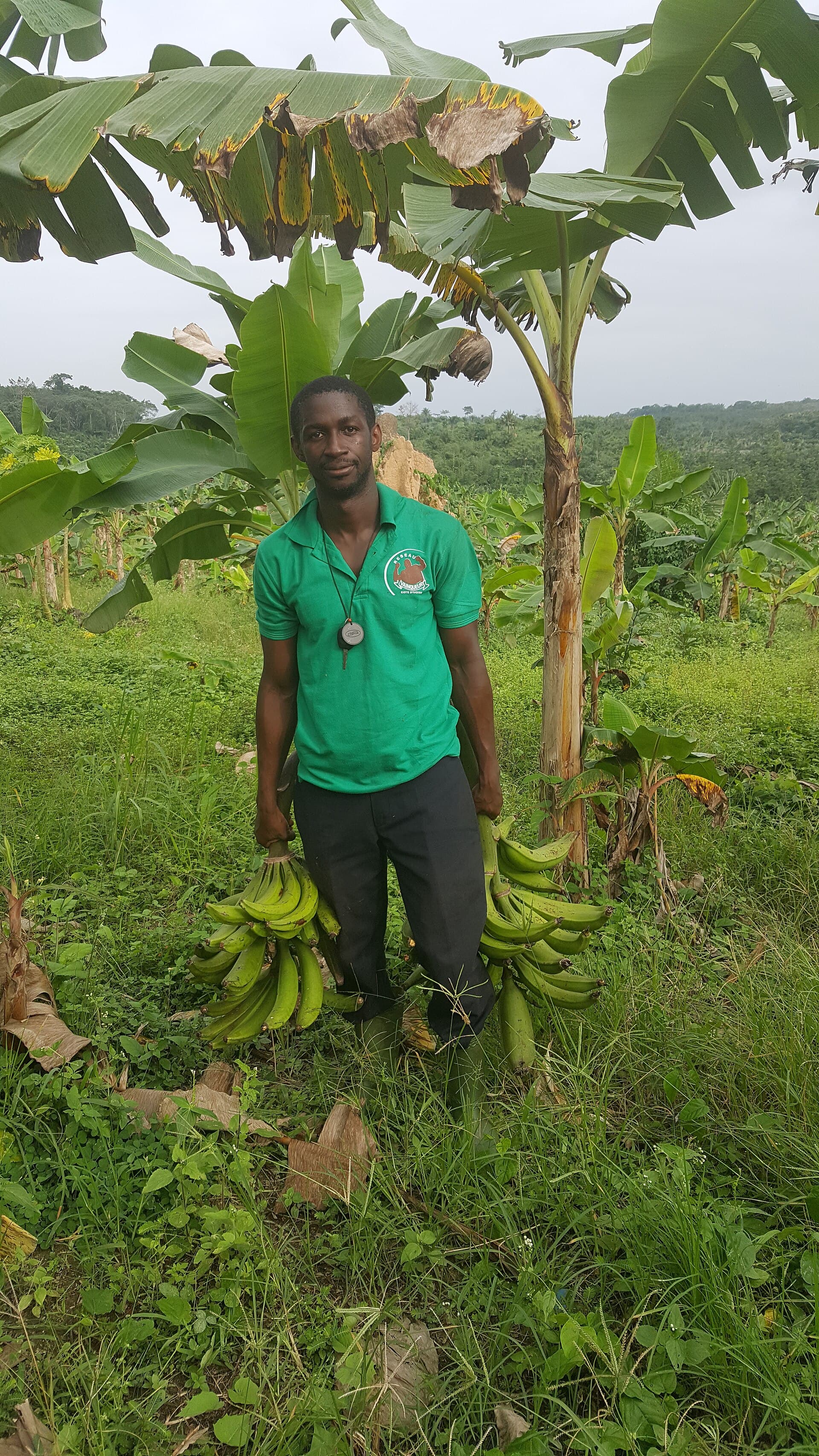
Pseudostems and leaves are bought from local smallholders — paid for material that used to be burned.
The human dividend
Sourcing that pays the countryside twice
The collection network pays Tangail farmers for material with zero previous value, while mill work brings steady wages — many to women — that did not exist here before fiber had an export market.
- 0 ha
- Pineapple belt (Modhupur/Tangail)
- 0 t
- Leaves per 1 t of fruit harvested
- 0%
- Of seaborne trade via Chattogram
- 0
- Income streams per farming family
Head to head
Bangladesh vs India vs the Philippines vs Taiwan
An honest comparison across the factors that decide sourcing — not a victory lap, because the right origin depends on your spec.
| Factor | Bangladesh | India | Philippines | Taiwan |
|---|---|---|---|---|
| Raw material base | Abundant banana + 6,880 ha pineapple belt (Modhupur/Tangail) | Large banana cultivation, fragmented processing | Established abaca & pineapple supply | Limited domestic fiber crop base |
| Fiber labor cost | Low; skilled decortication labor incl. women employment | Variable by region | Higher wage base | High wage base, automated textile focus |
| Duty access to EU | GSP preferences — reduced/zero duty on many textile lines | GSP preferences | GSP+ status (strong) | No GSP — MFN rates apply |
| Export logistics maturity | #2 garment exporter worldwide; deep freight forwarding bench | Congestion variability at major ports | Strong port infrastructure | Excellent ports, but fiber supply chain is thin |
| Typical fiber pricing | Raw banana fiber $4.00–5.50/kg FOB | Competitive but quality-inconsistent | Abaca historically higher-priced | Premium-priced, niche technical output |
| Sustainability narrative | Farm-waste circular model, no arable land used | Mixed; depends on processor | Established but land-competitive crops | Processing-heavy footprint |
Indicative, good-faith comparison for procurement screening; conditions vary by supplier, port, and season. Verify current duty rates and landed costs with your forwarder before committing.
Fair caveat: if your spec demands abaca specifically, the Philippines remains the reference. If you need pseudostem banana fiber or PALF at export scale, Bangladesh's combination of feedstock, labor, duty access, and logistics is hard to beat. Read our banana fiber vs abaca comparison for the material science behind that trade-off.
How to verify any Bangladeshi fiber supplier
- 1.Ask for a recent, lot-specific lab report rather than a generic certificate.
- 2.Request the mill address and confirm it on a video call with the production floor in frame.
- 3.Order courier samples of the actual batch you would receive.
- 4.Fix payment terms on a proforma invoice before transferring funds.
We welcome all four, every time — a genuine mill has nothing to hide.
Ready to source?
Get a written quotation within 24 hours
Tell us your grade, quantity, and destination. We reply with specs, indicative pricing, and a sample plan — MOQ from 200 kg, samples from 0.5 kg.